REWIND The 2000s
2
Digits, which is where the whole thing started
1998
President's Council on Year 2000 Conversion formed
~$100bn
Estimated US remediation spend
0
Civil aircraft that fell out of the sky

Why two digits

The problem

For decades, storage was the expensive thing. Writing a year as two digits instead of four saved two bytes per date, and across millions of records that was real money. Nobody expected the code to still be running.

The code was still running. In banking, utilities, air traffic, payroll and embedded controllers, systems written in the sixties and seventies were doing production work, and a great deal of it was date arithmetic. On 1 January 2000, 99 would roll to 00, and software that subtracted one from the other would get an answer of minus ninety-nine.

1998–1999

The most boring emergency ever run

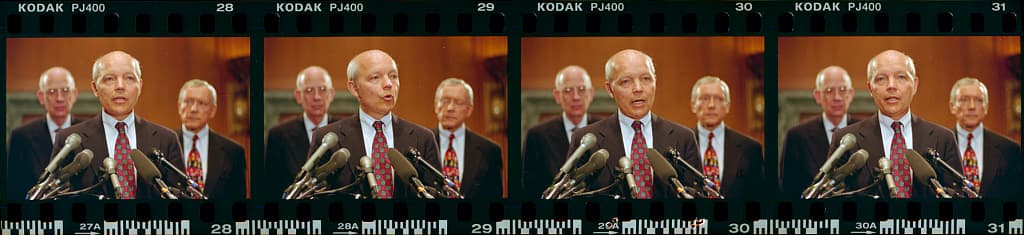
The United States set up a President's Council on Year 2000 Conversion in 1998 under John Koskinen. Congress held hearings for two years. The Y2K Act, limiting liability so that firms would fix problems rather than lawyer up about them, was signed in 1999.

What followed was tens of thousands of people reading old code line by line — much of it COBOL, much of it written by people who had retired. Some of them were hired back at rates they had never seen in their working lives.

It is one of the few genuinely large-scale, internationally coordinated software remediation efforts that has ever been attempted, and it worked.

The rollover

Nothing happened, loudly

Midnight moved across the world for twenty-four hours and was televised the entire way. Newsrooms had crews at power stations. Some people had bottled water and cash in the house. A handful of small faults occurred and were fixed.

The public conclusion, arrived at within about a week, was that Y2K had been a hoax. The people who had spent two years fixing it found this a difficult argument to answer, because the evidence for their work was an absence.

It remains the standard example of the prevention paradox: do the job properly and it looks like the job never needed doing.

A note on this page

Why there is so little to look at

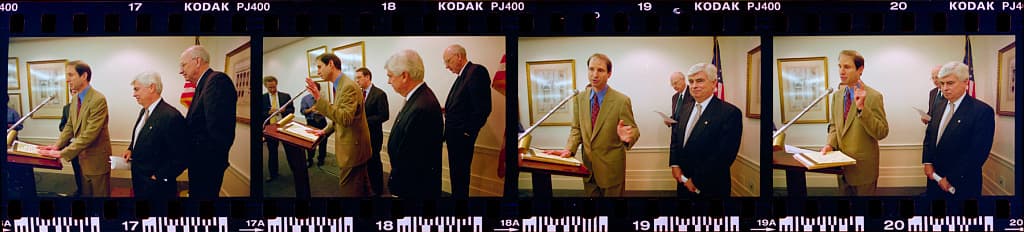
The Library of Congress holds thousands of photographs of the September 11 attacks and hundreds of the March on Washington. For Y2K it holds hearings.

That is the honest visual record of an averted disaster: committee rooms, testimony, and paperwork. Rather than fill this page with stock imagery of glowing green code, it is left thin on purpose.

Where this came from