REWIND The 1960s
39
Years old
1964
Nobel Peace Prize, at 35 — then the youngest recipient
6:01 pm
Shot on the balcony of the Lorraine Motel
100+
US cities where unrest followed

28 August 1963

Jobs and freedom

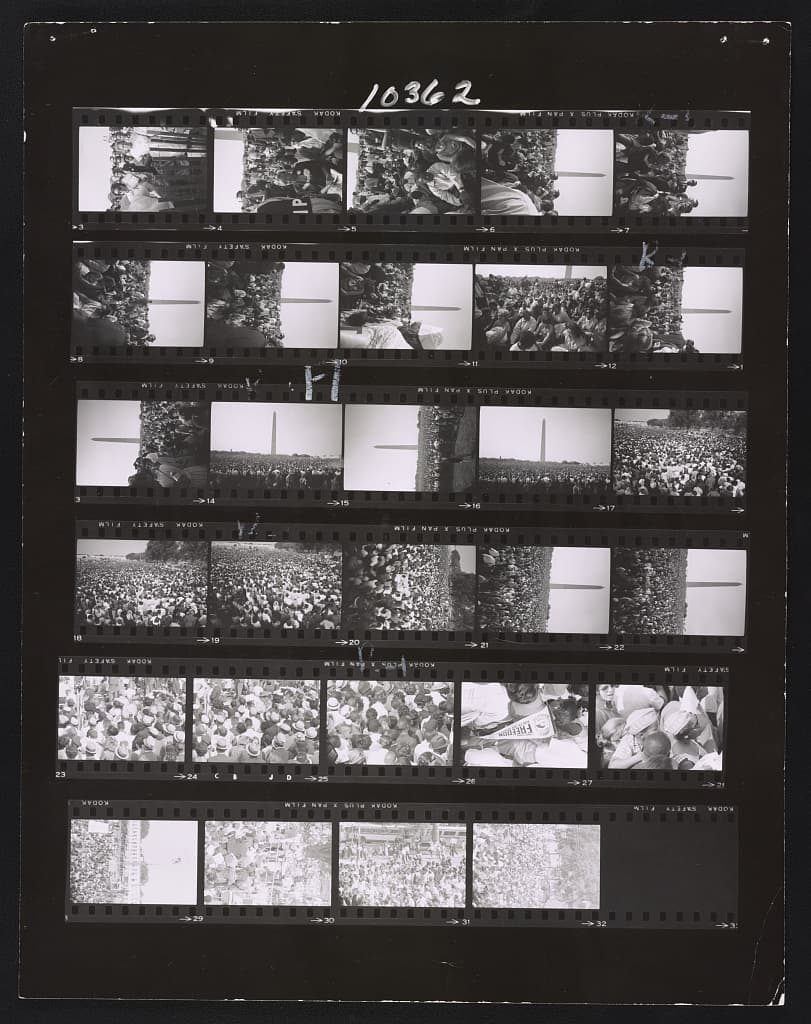
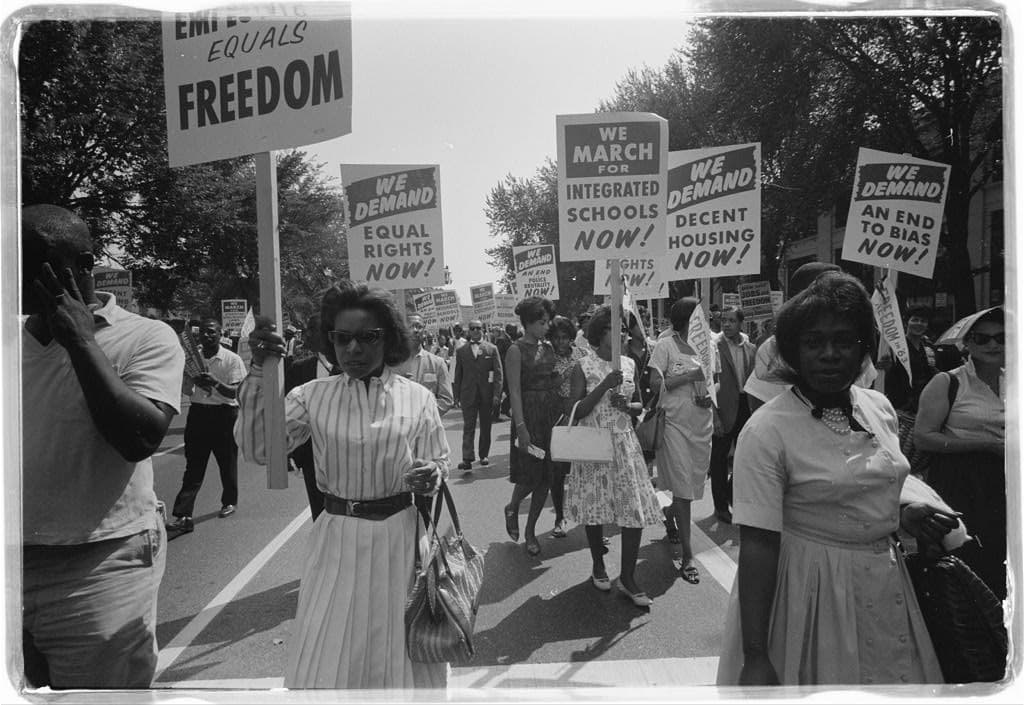
The March on Washington for Jobs and Freedom drew something on the order of a quarter of a million people to the Mall. The full name matters and is usually dropped: it was a march about employment and economic conditions as much as about segregation law.

King spoke last. The passage everyone can quote was not in the prepared text — Mahalia Jackson called out to him to tell them about the dream, and he left the page.

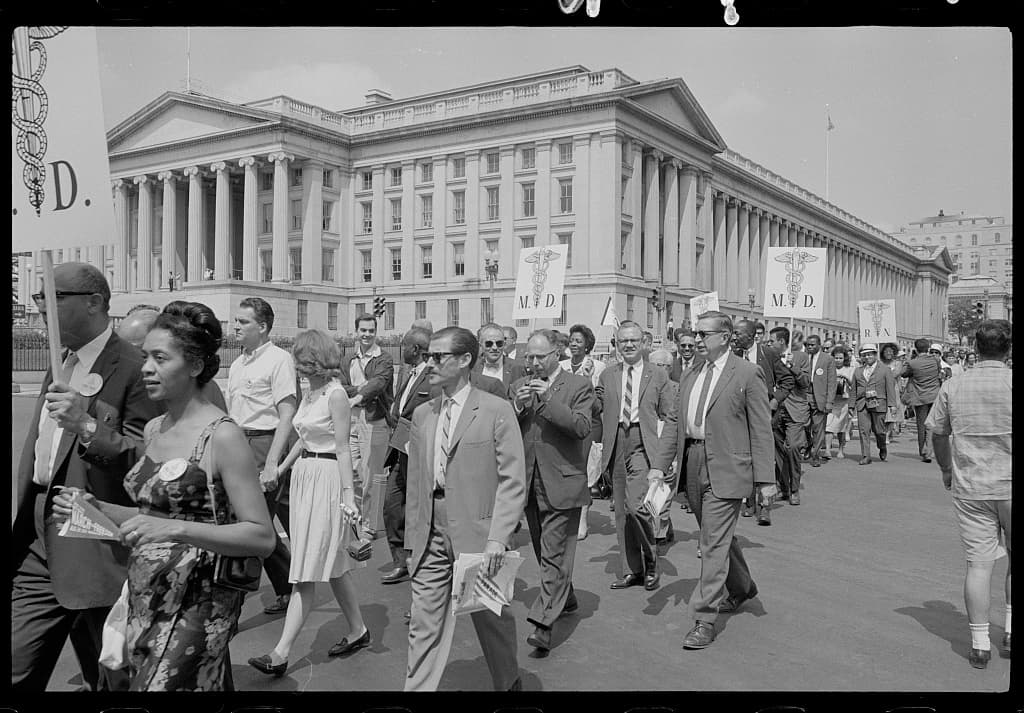
Marchers carrying a Medical Committee for Civil Rights banner at the 1963 March on Washington
Marchers with the Medical Committee for Civil Rights banner.1963. Library of Congress, Prints & Photographs Division
Crowds at the Civil Rights March on Washington, D.C.
The crowd on the Mall.1963. Library of Congress, Prints & Photographs Division

Spring 1968

Why he was in Memphis

Two sanitation workers, Echol Cole and Robert Walker, were crushed to death by a malfunctioning truck in February 1968. The strike that followed was about pay, recognition of the union, and not being killed at work. The placards read I AM A MAN.

King came to support it. By 1968 he had moved well beyond segregation law toward poverty and the war in Vietnam, positions that cost him a good deal of the support he had held in 1963.

On the evening of 3 April, at Mason Temple, he gave the speech that ends with him saying he had been to the mountaintop and had seen the promised land, and that he might not get there with them. He was killed the next evening on the balcony outside room 306 of the Lorraine Motel.
The days after

What followed

Unrest broke out in more than a hundred American cities. Robert Kennedy, campaigning in Indianapolis, told a crowd that did not yet know, and asked them to go home; he would himself be killed two months later.

The Civil Rights Act of 1968, which included the fair-housing provisions that had been stalled for two years, was signed on 11 April — one week after the killing.

James Earl Ray pleaded guilty in 1969 and later spent decades trying to withdraw the plea. He died in prison.

Sequence

Memphis, April 1968

  1. 1 Feb
    Two deaths

    Echol Cole and Robert Walker are crushed by a garbage truck's compactor. The city offers their families almost nothing.

  2. 12 Feb
    The strike begins

    Around 1,300 Memphis sanitation workers walk out.

  3. 28 Mar
    A march breaks down

    A march King leads turns violent at its edges. He returns determined to lead a peaceful one.

  4. 3 Apr
    Mason Temple

    King gives the speech that ends 'I've been to the mountaintop.'

  5. 4 Apr, 6:01 pm
    The Lorraine Motel

    King is shot on the second-floor balcony outside room 306.

  6. 4 Apr, 7:05 pm
    St. Joseph's Hospital

    He is pronounced dead.

  7. 11 Apr
    Fair housing

    The Civil Rights Act of 1968 is signed into law.

  8. 16 Apr
    The strike ends

    Memphis recognises the union and raises wages.

Where this came from